
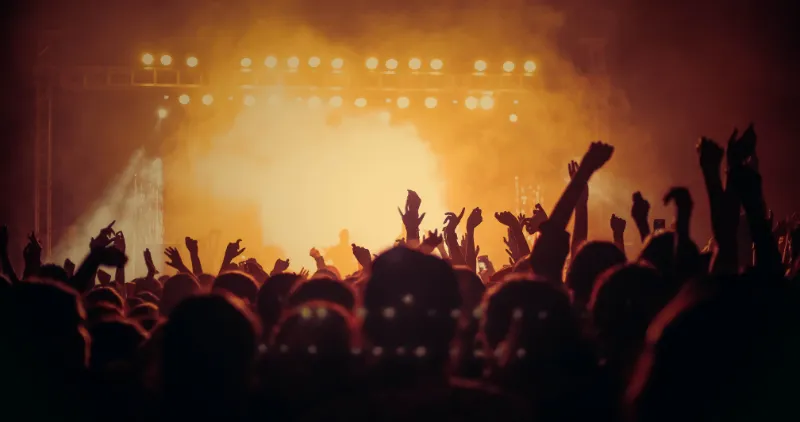
You left the concert buzzing with excitement, ears ringing, and voices sounding a little muffled, and by morning it was gone. So it’s fine, right?
Not always — a single loud concert can cause permanent hearing damage, and the fact that your hearing “came back” last time doesn’t mean the damage isn’t quietly adding up.
If you’re researching hearing loss treatment in Secunderabad after a night out at a loud venue, this is one of the most preventable causes of hearing damage we see at Dr. Deenadayal’s ENT Care Centre — and one of the easiest to actually do something about.
Key takeaways:
- Concert volumes regularly exceed levels known to damage hearing within minutes
- Ringing after a concert is a real warning sign, not a harmless souvenir
- Damage can occur even when a standard hearing test comes back normal
- Simple, inexpensive hearing protection meaningfully reduces your risk
- Children and teens are more vulnerable and less likely to protect themselves
Can One Loud Concert Really Cause Permanent Hearing Damage?
Yes — a single exposure to sufficiently loud music can permanently damage the delicate hair cells inside your inner ear, the tiny structures responsible for converting sound waves into the signals your brain interprets as hearing.
Research shows hair cells can begin sustaining damage at around 85 decibels, roughly the sound of a window air conditioner.
A typical rock concert runs at 110 to 115 decibels — up to ten times louder than ordinary conversation.
- Why exposure time matters as much as volume
At 85 decibels, you can generally tolerate around eight hours of exposure before risking damage. At 115 decibels, that safe window drops to under one minute. Most concerts run for hours at these levels, which is exactly why the risk is real, not exaggerated.
These thresholds aren’t arbitrary — the CDC/NIOSH noise exposure guidelines set 85 dBA as the point where hearing damage risk begins, with each 3-decibel increase cutting safe exposure time in half.
What’s Actually Happening Inside Your Ear at Concert Volume?
Loud sound physically overworks and damages the tiny hair cells inside your cochlea, and unlike many other cells in your body, these don’t regenerate once destroyed.
- Hair cell damage
Each hair cell responds to a specific sound frequency. Prolonged exposure to loud music bends and eventually breaks these delicate structures, permanently reducing your ability to hear those frequencies.
- Hidden hearing loss
This is the point most articles miss entirely. Research has shown that loud noise can damage the connection between hair cells and the hearing nerve — called synaptopathy — even when a standard hearing test still comes back “normal.”
This means someone can walk away from a string of loud concerts with real, measurable inner ear damage that doesn’t show up on a routine check, even though they may notice subtle difficulty understanding speech in noisy environments.
- Temporary threshold shift
The muffled hearing and ringing you notice right after a concert has a name: temporary threshold shift (TTS). It’s genuinely temporary in the moment — but repeated TTS episodes are increasingly understood as a sign of accumulating, hidden inner ear stress, not a harmless reset button.
When Does Temporary Damage Turn Into Something Permanent?
The shift from temporary to permanent damage isn’t usually one dramatic event — it’s the accumulation of repeated exposures over months or years.
A single very loud concert can occasionally cause permanent damage on its own, particularly if you’re close to speakers for an extended period.
More commonly, permanent noise-induced hearing loss develops gradually, from repeated concerts, clubs, or personal headphone use, each one adding a small amount of cumulative stress to hair cells that never fully recover between exposures.
If your ringing or muffled hearing takes longer than 24 to 48 hours to resolve after an event, that’s a signal your ears took a heavier hit than usual, and it’s worth getting checked rather than assuming it will settle on its own.
How Do You Know If You’ve Already Been Affected?
A few practical patterns are worth watching for, since early noise-induced changes are often subtle rather than dramatic.
Increasing difficulty following conversations in noisy restaurants or gatherings, needing the TV volume higher than you used to, or a persistent, low-level ringing that seems to have become your new normal are all worth paying attention to.
If that ringing has become a regular presence, our guide on understanding tinnitus and how to cope goes into causes and management strategies in more detail.
- Getting an actual answer
A standard hearing test (audiometry) checks how well you hear across different frequencies and can reveal noise-related patterns even before you consciously notice a problem in daily life.
Because hidden hearing loss doesn’t always show up on this test, describing your actual listening difficulties to your ENT — not just your test results — matters for a complete picture.
If ringing is the symptom bothering you most, our tinnitus treatment page covers the evaluation and management options in more depth.
What Can You Actually Do to Protect Your Hearing at Events?
Protection is simple, inexpensive, and genuinely effective — this is one of the few causes of hearing damage that’s almost entirely within your control.
- Choosing hearing protection
Basic foam earplugs reduce volume significantly and are widely available and cheap. Musician’s earplugs, a step up, are designed to lower volume evenly across frequencies rather than muffling everything, so you can still enjoy the music clearly at a safer level.
Worth knowing: earplugs help most when used correctly — our piece on whether earplugs can cause or worsen tinnitus covers the common mistakes that reduce their protective value.
- Positioning yourself at a venue
Standing farther from speakers and stage monitors meaningfully reduces your direct exposure, since sound intensity drops off quickly with distance.
- Giving your ears recovery time
Stepping outside briefly during a long event, or avoiding back-to-back loud events with a rest day between them, gives hair cells a chance to recover rather than compounding stress.
If concert-going or regular loud environments are part of your life and you’re noticing any of the warning signs above, it’s worth getting a baseline check now rather than waiting. Book a consultation with Dr. Deenadayal at Dr. Deenadayal’s ENT Care Centre through dsdentcare.com and find out where you actually stand.
What Does Recovery Look Like If Damage Has Occurred?
Temporary threshold shift typically resolves within a day or two of quiet rest, giving your hair cells time to recover.
If damage has become permanent, there’s currently no way to regenerate lost hair cells, but hearing aids and assistive devices can meaningfully manage the practical impact, and protecting your remaining hearing from further noise exposure becomes the priority going forward.
How Does Hearing Damage Affect Daily Life Long-Term?
Noise-induced hearing loss doesn’t just affect volume it often affects clarity first, particularly in noisy environments, and that’s a frustrating, isolating experience long before someone would describe themselves as having “hearing loss.”
Struggling to follow group conversations, constantly asking people to repeat themselves, or gradually withdrawing from noisy social settings are all real, common experiences tied to this kind of damage, and they’re exactly why catching it early, while it’s still manageable, matters.
What Should Parents Know Before Taking Kids to Loud Events?
Children’s ears are more vulnerable to noise damage, and kids are far less likely to self-report ringing or discomfort until it becomes bothersome.
If you’re taking a child to a concert or loud event, hearing protection sized for kids is worth using consistently, not just when they remember to ask.
Watching for signs like a child covering their ears, seeming unusually tired or irritable after an event, or asking you to repeat things more than usual afterward can help you catch early warning signs they may not think to mention themselves.
Final Thoughts
Concert volumes routinely exceed levels known to damage hearing, and the ringing you’ve dismissed as a normal part of a good night out is actually your body’s warning system doing exactly what it’s supposed to do.
The good news is that protecting your hearing at loud events is simple and cheap doesn’t require giving up concerts; it just requires taking that ringing seriously the next time you hear it.
Frequently Asked Questions
Why do my ears ring for hours after a concert but then go back to normal?
This is a temporary threshold shift, a short-term stress response in your inner ear that usually resolves within a day or two, though repeated episodes over time are a warning sign worth paying attention to.
Do noise-cancelling headphones protect your hearing the same way earplugs do?
Not in the same way — noise-cancelling headphones reduce background noise so you can listen at lower volumes, but they don’t physically block loud external sound the way earplugs do at a live event.
Can hearing loss from concerts affect just one ear if I favor a speaker on one side?
Yes, if you’re consistently positioned closer to a speaker on one side, that ear can sustain more damage than the other over repeated exposures.
Is it true that musicians have higher rates of hearing loss than regular concertgoers?
Yes, studies have found a meaningful percentage of professional musicians show some degree of permanent hearing loss, largely due to frequent, prolonged exposure during performances and rehearsals.
Can I use a smartphone app to check if a venue’s volume is unsafe?
Yes, decibel-measuring apps can give you a reasonable estimate of sound levels in real time, which can help you decide whether to move farther from speakers or use hearing protection.
Does drinking alcohol at a concert make hearing damage worse?
Alcohol itself doesn’t directly damage hearing, but it can reduce your awareness of how loud an environment actually is, making you less likely to notice warning signs or use protection.
How soon after a loud event should I get a hearing test if I’m concerned?
If ringing or muffled hearing lasts more than 48 hours, it’s reasonable to get checked within that week rather than waiting for it to potentially resolve on its own.
Can wearing earplugs at a concert make the music sound worse?
Basic foam earplugs can muffle sound unevenly, but musician’s earplugs are specifically designed to lower volume while preserving sound quality and clarity.
Is hearing damage from loud music always gradual, or can it happen suddenly?
It can happen either way — a single very loud, prolonged exposure can occasionally cause immediate damage, though most noise-induced hearing loss builds up gradually over repeated exposures.
Can I still enjoy live music safely, or should I avoid concerts altogether?
You don’t need to avoid concerts — using proper hearing protection, taking breaks from the loudest areas, and monitoring your ears afterward lets you enjoy live music while meaningfully reducing your risk.
Medical Disclaimer:
Content regarding acoustic trauma, noise-induced hearing loss, and ENT evaluation protocols is for informational and educational purposes only. It is not a substitute for clinical advice, diagnosis, or treatment. Always consult a qualified ENT specialist or audiologist for personalized medical guidance regarding hearing protection, tinnitus evaluation, and auditory health.

DECC Clinical Content Team
CALL US FOR ANY HELP
GET IN TOUCH ON