
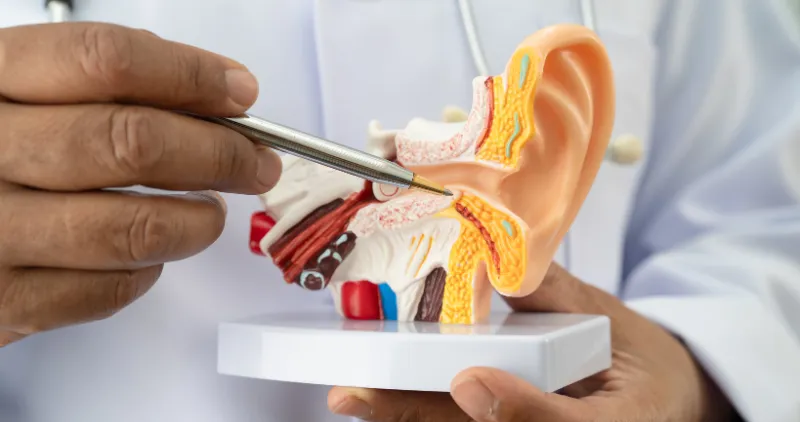
That sudden ear pain, muffled hearing, or discharge can make you worry that your eardrum is permanently damaged.
In many cases, a perforated eardrum heals on its own within a few weeks, often by around 6 to 8 weeks, without surgery. Some take longer, depending on the size of the hole, the cause, and whether infection continues.
At Dr. Deenadayal’s ENT Care Centre in Secunderabad, our ENT specialists assess the eardrum and hearing to determine whether it is safe to allow natural healing or whether further treatment is needed.
Key Takeaways
- Most small eardrum perforations heal naturally within several weeks.
- Keeping the ear dry can help protect the healing eardrum from infection.
- Do not put cotton buds, oil, or unprescribed ear drops inside the ear.
- Persistent discharge or hearing loss needs an ENT assessment.
- Surgery isn’t automatically required, even when a perforation takes longer to heal.
How long does a perforated eardrum take to heal without surgery?
Most perforated eardrums heal within a few weeks, and many close within about 2 months, in line with NHS guidance. Some small perforations may heal sooner, while larger or complicated holes can take longer.
The healing process depends on several factors. A small hole caused by a simple injury may close naturally, while a perforation associated with ongoing infection may take longer.
The size and position of the hole, the cause of the injury, infection, and the condition of the middle ear all influence healing.
A useful point to remember is that feeling better doesn’t always mean the eardrum has completely closed. An ENT examination is the best way to confirm healing.
What exactly happens when the eardrum is perforated?
A perforated eardrum means there is a hole or tear in the tympanic membrane, the thin tissue separating the ear canal from the middle ear.
The eardrum vibrates when sound enters your ear. These vibrations are passed to three tiny bones in the middle ear and then towards the inner ear.
When there is a hole, sound may not be transmitted as efficiently. This can cause muffled hearing or temporary hearing loss. The opening can also allow water and bacteria to reach the middle ear more easily.
Some people also notice:
- Ear pain
- Ringing or buzzing
- Clear, bloody, or pus-like discharge
- A blocked-ear sensation
- Dizziness
The symptoms depend on what caused the perforation and whether there is an associated infection or other ear injury.
What causes a perforated eardrum in the first place?
Middle ear infections are one of the common causes of an eardrum perforation. Pressure from infected fluid behind the eardrum can cause it to tear.
Other causes include:
- Direct injury, such as being hit on the ear
- Putting cotton buds or other objects too far into the ear
- Sudden pressure changes during flying or diving
- Exposure to an exceptionally loud sound or blast
- Significant head trauma
Sometimes the pain suddenly improves after an infection causes the eardrum to rupture. This can happen because infected fluid escapes and pressure inside the middle ear falls.
How can you tell whether the eardrum is healing?
Improvement in pain, discharge and hearing can suggest recovery, but symptoms alone cannot confirm that the hole has closed.
Our ENT specialists can examine the eardrum directly with an otoscope. If hearing is affected, an audiometry test may also be recommended.
Depending on the situation, tympanometry may be used to assess how the eardrum and middle ear respond to changes in air pressure.
This is especially useful when hearing hasn’t returned as expected.
A patient may feel that hearing is improving while a small perforation is still present. The reverse can also happen, where the eardrum has healed but hearing remains reduced because another part of the middle ear was affected.
What can you do at home to help the eardrum heal?
The most important step is to protect the ear while it is healing.
Keep water out of the affected ear when bathing or washing your hair. Avoid swimming until your ENT specialist confirms that the eardrum has healed.
You should also:
- Don’t put cotton buds or other objects inside the ear.
- Don’t use ear drops unless they have been recommended for your situation.
- Avoid forceful nose blowing.
- Follow prescribed treatment if an infection is present.
- Protect the ear from further injury.
Mayo Clinic specifically advises keeping the ear dry, avoiding ear cleaning and avoiding nose blowing while the eardrum heals.
When should you see an ENT doctor?
You should have a medical assessment if you think your eardrum is perforated, particularly if you have hearing loss, discharge, pain or dizziness.
Some symptoms need prompt attention. These include sudden hearing loss, worsening hearing, persistent ear discharge, significant dizziness, severe pain, or symptoms following a head injury.
At Dr. Deenadayal’s ENT Care Centre, our team can examine the ear, identify the likely cause and decide whether observation, medication, hearing assessment or further ear treatment is appropriate.
You don’t need to assume that a perforated eardrum automatically means surgery.
What happens if the hole doesn’t heal by itself?
If the perforation remains open after the expected healing period, your ENT specialist will reassess the ear before deciding what to do next.
The doctor may look for ongoing infection, persistent discharge, hearing loss, the size and position of the hole, and the condition of the middle ear.
In selected cases, a doctor may use a patch procedure to encourage closure. If the hole remains persistent, surgery such as myringoplasty or tympanoplasty may be considered.
Tympanoplasty is an operation that repairs the eardrum using a tissue graft. In some patients, the tiny hearing bones in the middle ear may also need assessment or repair. Our ear surgery page explains what to expect before and after eardrum surgery.
Does every perforated eardrum need surgery?
No. Many perforated eardrums heal without surgery.
Surgery is considered when the hole doesn’t close naturally, especially when it is associated with ongoing hearing problems, repeated infections or persistent discharge.
A small, dry perforation with good hearing may be managed differently from a larger perforation associated with chronic ear disease.
The decision should be based on examination and hearing assessment, not simply on how long the hole has been present.
Can a perforated eardrum affect hearing permanently?
It can, but hearing loss from a perforation is often temporary.
The size and location of the hole can affect how much hearing changes. Damage to the tiny middle-ear bones can cause additional hearing loss.
If the eardrum closes but hearing remains reduced, an ENT specialist may investigate whether there is another cause.
This is why hearing should be assessed when symptoms persist rather than assuming the problem will disappear when the hole closes.
Can water or infection delay healing?
Yes, water entering a perforated ear can increase the risk of infection, which can interfere with recovery.
The eardrum normally forms a protective barrier between the outer ear and middle ear. When that barrier is broken, bacteria and water can reach areas that are normally protected.
This is why we advise patients to keep the ear dry and avoid swimming until healing has been confirmed.
If there is discharge, don’t try to clean deep inside the ear yourself. An ENT examination is safer. If the discharge has a foul smell, our guide on why ear discharge smells bad explains what it can mean.
Can you prevent another perforated eardrum?
Protecting the ear from infection, trauma and excessive pressure can lower the risk of another perforation.
Avoid putting cotton buds, hairpins or other objects inside the ear. Treat ear infections appropriately and protect your ears from excessive noise.
If you have previously had a perforation, tell your ENT specialist before using ear drops or undergoing any ear procedure.
For people who regularly fly or dive, pressure-related ear problems should also be discussed with a doctor when there is a history of eardrum injury.
When is a perforated eardrum an urgent problem?
Sudden major hearing loss, severe dizziness, significant bleeding, severe pain or an eardrum injury after major head trauma should be assessed promptly.
Don’t wait several weeks to see whether these symptoms settle on their own.
Persistent discharge, worsening hearing or symptoms that aren’t improving also deserve medical review.
Can you sleep normally with a perforated eardrum?
Yes, most people can sleep normally, but it’s sensible to avoid putting pressure on a painful or draining ear.
If one sleeping position increases pain or causes fluid to drain, choose the more comfortable side until the ear has been assessed.
There is no need to keep the head elevated unless your doctor has advised it for another reason.
What should you avoid while waiting for the eardrum to heal?
Avoid anything that can introduce water, bacteria, pressure or further trauma into the affected ear.
For the healing period:
- Don’t swim.
- Don’t put objects into the ear.
- Don’t use unprescribed ear drops.
- Don’t blow your nose forcefully.
- Don’t ignore persistent discharge or hearing loss.
These simple precautions can help protect the healing membrane.
When should surgery be considered?
Surgery is generally considered when the perforation remains open or continues to cause problems despite appropriate observation and treatment.
A procedure such as tympanoplasty may be recommended when the eardrum needs reconstruction, particularly when there is persistent hearing loss, repeated infection or another middle-ear problem.
Our goal at Dr. Deenadayal’s ENT Care Centre is not to recommend surgery simply because a perforation is present. We first assess whether the ear has a reasonable chance of healing naturally and what is affecting your hearing or ear health.
Can a perforated eardrum heal completely?
Yes, many perforated eardrums close completely without surgery, especially when the hole is small and the ear remains protected and free from ongoing infection.
But healing isn’t identical for everyone.
If the hole remains open, discharge continues, or hearing doesn’t improve, don’t keep waiting without an assessment. A simple ENT examination can tell you much more than symptoms alone.
Need an ENT assessment in Secunderabad?
If you have a suspected perforated eardrum, persistent discharge or hearing changes, our ENT and Ear Surgery team at Dr. Deenadayal’s ENT Care Centre, Secunderabad, can assess the eardrum and hearing and guide you on whether observation or further treatment is appropriate. Our approach is to treat the cause and protect your long-term ear health, not rush you into surgery. You can find our ENT and ear clinic in Secunderabad on Google for directions and timings.
FAQs
1.Can a perforated eardrum heal in 3 days?
It can start healing quickly, but complete closure in only 3 days isn’t typical. Most perforations take several weeks to close, although the exact time depends on the size and cause.
2.Can I use headphones if I have a perforated eardrum?
You should ask your ENT specialist before using in-ear headphones. Avoid putting anything inside the ear canal while the eardrum is healing, particularly if the ear is painful or draining.
3.Can I use a hair dryer near a perforated eardrum?
You should keep the ear protected from direct heat and avoid directing air into the ear canal. The main priority is keeping water and objects out of the ear while it heals.
4.Can I travel by air with a perforated eardrum?
A perforated eardrum itself doesn’t always prevent flying, but the cause and current symptoms matter. If you have severe pain, active infection, dizziness or recent ear trauma, speak with an ENT specialist before travelling. NHS guidance states that flying can be safe with a perforated eardrum, while flying restrictions are different after eardrum repair surgery.
5.Can I exercise with a perforated eardrum?
Light daily activity is generally possible, but avoid activities that expose the ear to water, trauma or major pressure changes until healing is confirmed. Your ENT specialist can advise you about swimming, diving and contact sports.
6.Is ear discharge always a sign that the eardrum is not healing?
No, discharge can occur because of an infection associated with the perforation. However, ongoing or foul-smelling discharge should be assessed rather than assumed to be part of normal healing.
7.Can a perforated eardrum cause ringing in the ear?
Yes, tinnitus, meaning ringing or buzzing in the ear, can occur with a perforated eardrum. It often improves as the underlying ear problem settles, but persistent ringing should be assessed. If it affects only one ear or began suddenly, our guide on sudden tinnitus in one ear explains the possible causes.
8.Can I put olive oil in a perforated ear?
No, don’t put olive oil or other home remedies into an ear with a suspected perforation unless an ENT specialist specifically advises it. Some ear preparations aren’t appropriate when the eardrum is not intact.
9.What if my hearing is normal but the eardrum still has a hole?
A person can have relatively good hearing despite a persistent perforation. Whether treatment is needed depends on factors such as the size and position of the hole, recurrent infections, discharge and the patient’s daily needs.
10.Can an old perforated eardrum suddenly start leaking again?
Yes, a previously stable perforation can become symptomatic if the ear develops an infection or is exposed to water or further injury. New discharge, pain or worsening hearing should be evaluated by an ENT specialist.
Final Thoughts
Most perforated eardrums heal naturally, often within several weeks to around two months. The safest approach is to protect the ear, keep it dry, avoid putting anything inside it and have persistent symptoms checked.
If the perforation doesn’t close, that doesn’t mean you have run out of options. An ENT assessment can determine why healing has stopped and whether continued observation, a patch or eardrum repair is appropriate.
Medical Disclosure
This article is intended for general health information and does not replace an examination, diagnosis or treatment from a qualified medical professional. A perforated eardrum can have different causes and may affect hearing or the middle ear in different ways. If you have sudden hearing loss, severe dizziness, significant bleeding, persistent discharge, severe pain or an injury involving the head or ear, seek medical attention promptly.
