
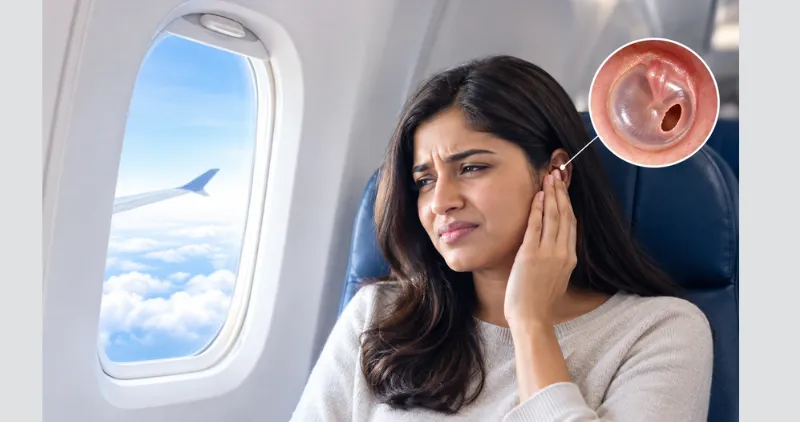
If you’re worried that a damaged eardrum could make flying dangerous, you’re not alone.
In most cases, flying with a perforated eardrum is considered safe, but your symptoms, the cause of the perforation, and whether you’ve recently had ear surgery all matter.
At Dr. Deenadayal’s ENT Care Centre, Secunderabad, we assess ear and hearing problems carefully so patients can make safe decisions about travel, work and daily activities.
Key Takeaways
- A naturally perforated eardrum usually doesn’t prevent you from flying.
- Pressure changes during take-off and landing are different when the eardrum is already perforated.
- Recent eardrum repair surgery requires a separate travel restriction from your ENT surgeon.
- Active infection, severe pain, discharge, dizziness or sudden hearing loss should be assessed before travel.
- Keep a healing eardrum dry and don’t put drops or objects into the ear unless prescribed.
Can you fly with a perforated eardrum?
Yes, most people with a perforated eardrum can fly safely. The NHS specifically states that flying is safe with a perforated eardrum.
The reason may seem surprising. During take-off and landing, the air pressure around you changes. With an intact eardrum, pressure differences can create discomfort when the middle ear can’t equalise quickly enough.
With a perforation, air can pass through the opening, which may allow pressure to equalise more easily. Some people may therefore experience less pressure-related discomfort than they expect.
However, “safe to fly” doesn’t mean every situation should be treated the same way.
Why does flying affect the ears?
Flying causes rapid changes in air pressure, especially during take-off and descent. Normally, the Eustachian tube, a small passage connecting the middle ear to the back of the nose and throat, helps balance this pressure.
If this pressure doesn’t equalise properly, you can develop ear barotrauma, meaning pressure-related injury to the ear.
In some cases, severe pressure differences can damage or even rupture the eardrum.
Is flying safe if the eardrum ruptured recently?
A recent perforation doesn’t automatically mean you must cancel your flight, but the cause and your current symptoms should be considered.
A perforation may happen because of:
- A middle-ear infection
- A sudden pressure change
- A blow or other ear injury
- A loud blast
- An object entering the ear
If the perforation occurred shortly before travel and you’re experiencing severe pain, active discharge, significant dizziness or sudden hearing loss, we recommend an ENT assessment before flying.
The key question isn’t only whether there is a hole in the eardrum. We also need to know what caused it and whether the middle or inner ear has been affected.
Can flying make a perforated eardrum worse?
Flying with an uncomplicated perforated eardrum does not usually cause the same pressure problem as flying with an intact but poorly equalising eardrum.
Still, don’t assume that every ear symptom during travel is harmless.
If you develop severe pain, worsening hearing, marked dizziness or new drainage, you should seek medical assessment rather than simply continuing with your travel plans.
A perforated eardrum also removes some of the normal protection between the outside environment and middle ear, so keeping the ear dry remains important while it heals.
What if my ear is leaking fluid or blood before the flight?
Ear discharge or bleeding should be assessed before you travel if you haven’t already been examined.
Clear fluid, pus or blood can occur with a perforated eardrum, but these symptoms can also occur with infection or ear injury.
If the discharge is accompanied by fever, increasing pain, worsening hearing or dizziness, don’t rely on home treatment.
An ENT examination can determine whether there is a perforation, infection or another ear problem. If the discharge has a foul smell, our guide on why ear discharge smells bad explains what it can mean.
What if I have a perforated eardrum after surgery?
This is different from an untreated or naturally healing perforation.
If you’ve had surgery such as myringoplasty or tympanoplasty, don’t assume that the general advice about flying with a perforated eardrum applies to you.
The NHS advises patients not to fly after myringoplasty until their doctor says it is safe.
Your surgeon may give you a specific waiting period based on the procedure, healing and follow-up examination.
Always follow the travel instructions given by the ENT surgeon who performed your repair. Our ear surgery page lists the aftercare instructions we give patients, including not swimming, diving or flying until the doctor approves.
What should you do during take-off and landing?
If your ENT has confirmed that you’re fit to fly, simple pressure-management measures can make the journey more comfortable.
You can:
- Swallow regularly
- Yawn during pressure changes
- Sip water
- Chew gum if comfortable
- Follow any specific advice given by your ENT specialist
These actions help the Eustachian tube open and assist pressure equalisation in people whose ears need it.
Don’t forcefully blow your nose or perform aggressive pressure manoeuvres while the eardrum is healing.
For general airplane ear prevention with an intact eardrum, see our guide on how to avoid ear pain during a flight, but skip the forceful manoeuvres it describes if you have a perforation.
Should you use ear drops before flying?
Don’t put ear drops into a perforated ear unless an ENT specialist has prescribed or approved them.
Some medicines aren’t suitable when the eardrum is open. Mayo Clinic also advises against using ear medicine drops unless they have been prescribed for the specific situation.
The same applies to cotton buds and other objects. A healing eardrum needs protection, not cleaning inside the ear canal.
Can you fly if you have hearing loss from a perforated eardrum?
Hearing loss can occur with a perforated eardrum, and the degree depends partly on the size and location of the tear and whether other ear structures are involved.
Many perforations heal and hearing improves as the eardrum recovers.
However, sudden hearing loss should be assessed promptly, particularly if it is severe or accompanied by dizziness, pain or discharge.
If you’re planning international travel, it’s sensible to have the ear examined before departure if your hearing has recently changed.
How does an ENT confirm that you can travel safely?
An ENT specialist can examine the eardrum directly and assess whether there are signs of infection, injury or other complications.
We may use an otoscope, a lighted instrument that allows us to look inside the ear.
Depending on your symptoms, hearing tests such as audiometry may also be useful. Tympanometry can assess how the eardrum responds to changes in air pressure and may help identify a perforation.
The assessment becomes especially important if your perforation followed trauma, severe infection, diving or another pressure-related injury.
How long does a perforated eardrum take to heal?
Many perforated eardrums heal naturally within several weeks, and the NHS states that most heal within about two months.
The healing time depends on factors such as the size and cause of the perforation and whether infection is present.
Some patients need treatment if the hole doesn’t close on its own. Options can include an eardrum patch or surgical repair, depending on the situation.
What should you avoid while travelling with a healing eardrum?
Protecting the ear from water and further injury is more important than trying to clean it.
While the perforation is healing:
- Don’t swim unless your doctor says it’s safe.
- Keep water from entering the affected ear.
- Don’t insert cotton buds or other objects.
- Don’t use unprescribed ear drops.
- Avoid forceful nose blowing.
These precautions help reduce the chance of infection and further injury.
When should you see an ENT before flying?
Arrange an ENT assessment before travel if you have sudden hearing loss, worsening hearing, significant ear pain, discharge, bleeding or dizziness.
You should also seek advice if the perforation followed a significant head injury, loud blast, diving accident or recent ear surgery.
These symptoms don’t automatically mean that flying is dangerous, but they need proper assessment before you make a travel decision.
Can a perforated eardrum affect your daily life while travelling?
Most people with a healing perforation can continue normal activities with a few precautions.
The main practical concerns are keeping the ear dry, protecting your hearing and following any treatment prescribed for infection.
If hearing is reduced, background noise in airports or aircraft cabins can make conversations harder. Carrying your prescribed medicines and keeping your ENT records accessible can also make travel easier if you need medical care away from home.
- Can you fly with a perforated eardrum?
Yes, in most cases, you can fly with a perforated eardrum. The important exceptions include situations such as recent eardrum repair surgery or active symptoms that require medical assessment.
At Dr. Deenadayal’s ENT Care Centre, our ENT team in Secunderabad evaluates ear infections, hearing problems and perforated eardrums, including conditions that may require microscopic or endoscopic ear surgery. You can find ear examination clinic in Secunderabad on Google for directions and timings.
FAQs
1.Can I fly the day after my eardrum ruptures?
Not without considering why it ruptured and how you feel. If the rupture is recent and you have significant pain, discharge, dizziness or hearing loss, an ENT assessment before travel is sensible.
2.Can a perforated eardrum close during a flight?
No, flying doesn’t make the hole close. The eardrum heals naturally over time when the conditions are suitable for healing.
3.Can I wear headphones on a plane with a perforated eardrum?
It depends on your symptoms and comfort. Avoid anything that causes pain or pressure, and follow your ENT specialist’s advice if the ear is recently injured or infected.
4.Can I use cotton buds to clean discharge before flying?
No, don’t put cotton buds inside a perforated ear. They can injure the ear further and push material deeper into the canal.
5.Can I swim on holiday if my perforated eardrum feels better?
Not until your ENT confirms that the eardrum has healed or gives you specific permission. Water entering the middle ear through a perforation can increase the risk of infection.
6.Does a perforated eardrum always cause pain?
No, pain isn’t always severe or persistent. Some people notice pain that quickly improves, followed by drainage or hearing changes.
7.Can I scuba dive with a perforated eardrum?
You should not scuba dive with an unhealed perforated eardrum unless an ENT specialist specifically clears you. Diving creates substantial pressure changes and also exposes the ear to water.
8.Can I travel internationally with a perforated eardrum?
Yes, many people can travel internationally once their condition has been assessed and is stable. Long travel doesn’t change the basic need to protect the ear from water and follow prescribed treatment.
9.Can I take pain medicine before a flight if my ear hurts?
Pain medicine may help some people, but it shouldn’t be used to hide worsening symptoms. Persistent or severe pain before travel should be assessed rather than managed only with medication.
10.Can I fly if my perforated eardrum hasn’t completely healed?
Often yes, but this should be considered alongside your symptoms and the cause of the perforation. If you have active infection, significant dizziness, worsening hearing or recent repair surgery, get specific medical advice before flying.
Final Thoughts
A perforated eardrum doesn’t automatically mean you have to cancel your flight. For an uncomplicated, naturally healing perforation, air travel is generally considered safe.
The safest approach is to know why the eardrum is perforated, keep the ear protected while it heals and seek an ENT assessment if you have new hearing loss, discharge, significant pain, dizziness or recent ear surgery.
Medical Disclosure
This article is for general health education and does not replace an individual examination by an ENT specialist. Travel advice can differ depending on the cause of the perforation, symptoms, hearing status and whether ear surgery has been performed. If you have significant or worsening ear symptoms, seek medical assessment before travelling.
