
What Is an Ideal Age for Adenoid Removal?
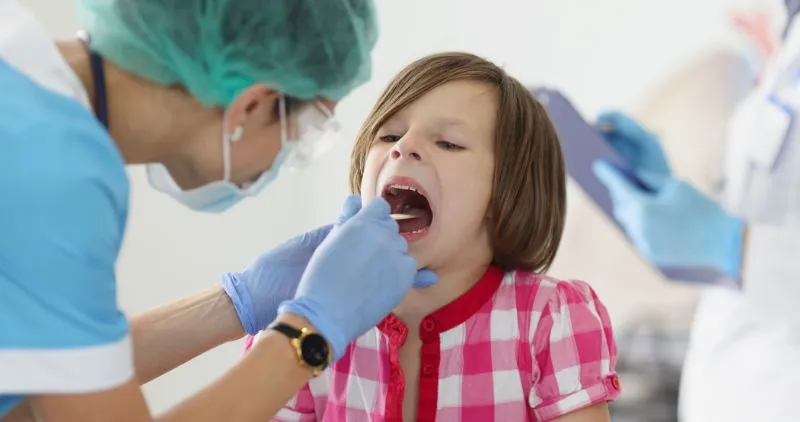
The ideal age for adenoid removal is usually between 3 and 7 years, especially when the adenoids are causing breathing issues, ear infections, or disturbed sleep.
At the Best ENT Centre in Secunderabad, I often meet parents worried about whether their child’s symptoms are serious enough for surgery.
Let me explain what I share with them in simple terms, based on real-life examples from my clinical practice.
What Are Adenoids and Why Do They Matter?
Adenoids are small glands located behind the nose, near the top of the throat. You can’t see them directly when you look into your child’s mouth—they sit behind the nasal cavity.
In younger children, adenoids are part of the immune system. They help the body fight germs. But sometimes, they grow too large and start blocking the airflow through the nose.
Over the years, I’ve seen many children between 3 to 7 years old with enlarged adenoids. Instead of protecting the child, these swollen glands start causing problems like poor sleep, difficulty breathing, and frequent infections.
Real-Life Symptoms I See in Children
Let me share a couple of stories that may sound familiar.
One 4-year-old boy came in with constant mouth breathing. His mother said, “He hasn’t breathed through his nose for months!” He also snored loudly at night and was always tired during the day.
Another 6-year-old girl had frequent ear infections and was having trouble hearing. She was starting to fall behind in school. When we checked, her adenoids were so large they were blocking her ear drainage canals.
Some common symptoms of enlarged adenoids include:
- Breathing through the mouth most of the time
- Loud snoring or restless sleep
- Tiredness during the day
- Nasal-sounding speech
- Trouble hearing or delayed speech
- Repeated ear or sinus infections
These issues affect more than just breathing—they can impact your child’s sleep, growth, energy, and learning.
So, When Is the Right Time to Remove Adenoids?
In my experience, children between 3 and 7 years old are the ones who usually need adenoid surgery. That’s when adenoids are largest and most likely to cause problems.
We usually avoid surgery before age 1 unless there’s a severe issue.
But every child is different. I’ve operated on a 2-year-old with severe sleep apnea and seen 8-year-olds manage just fine without surgery. It’s not just about age—what matters is how much the adenoids are affecting your child’s health and quality of life.
As an experienced ENT Doctor in Secunderabad, I always say this:
Don’t focus only on age—look at how your child is doing overall.
How Do We Decide If Surgery Is Needed?
We start by talking with the parents and understanding the child’s symptoms.
Here are some of the questions we usually ask:
- Does your child snore loudly at night?
- Do they breathe mostly through the mouth?
- Are they often tired during the day?
- Are ear infections or hearing issues common?
- Is their speech affected?
If the answers suggest that the adenoids are interfering with breathing, sleep, or hearing, we may do a nasal endoscopy—a safe and quick way to check adenoid size using a small camera.
Sometimes we also use X-rays or hearing tests. Based on the results, we decide whether to try medical treatment or recommend surgery.
What Happens During Adenoid Removal Surgery?
Adenoidectomy (adenoid removal surgery) is a simple daycare procedure. It’s done under general anesthesia and takes about 30 minutes.
Children go home the same day.
After surgery, kids might have:
- A sore throat
- Mild fever
- Stuffy nose
These usually go away in a few days. We advise soft food, fluids, and rest. Most children recover fully in less than a week.
Is Adenoid Removal Safe?
Yes, when done by an experienced ENT surgeon, adenoidectomy is safe.
As a doctor, I know that any surgery sounds scary for parents. But complications are rare, and studies show children who need adenoid removal often sleep better, breathe better, hear better, and feel more energetic after the procedure.
In my own experience, I’ve seen dramatic improvements in children just days after the surgery—better sleep, more energy, and even improvements in speech and learning.
Do Adenoids Ever Grow Back?
In most children, adenoids do not grow back after surgery, especially if they are older than 3.
In rare cases where the surgery is done very early (under age 2), a small portion might grow again, but it rarely causes problems.
Concerned About Your Child’s Snoring or Breathing Issues? Let’s Talk.
If your child:
- Snores loudly
- Breathes through the mouth
- Has frequent ear infections or speech delays
Then it may be time for an expert evaluation.
Book a consultation today at one of the Best ENT Centres in Secunderabad.
We’ll assess your child gently and thoroughly—and decide if surgery is necessary or if we can manage it without one.
Your child’s health and comfort come first. Let’s work together to help them breathe, sleep, and grow better.
FAQs
Q1. Can enlarged adenoids affect a child’s facial growth?
Yes, long-term mouth breathing due to enlarged adenoids can change facial structure. It’s called “adenoid facies.” Early treatment helps avoid this.
Q2. Are adenoids and tonsils always removed together?
Not always. If both are enlarged, we might remove both. But if only the adenoids are causing problems, we remove just those.
Q3. Can adults have adenoid problems too?
Yes. Adenoids shrink after childhood. If adults have similar symptoms, we usually look for Adenoids and other causes.
Q4. Does removing adenoids weaken the immune system?
No. The body has many immune backup systems. Removing adenoids doesn’t weaken a child’s immunity.
Q5. How soon after surgery can my child travel?
Usually after 7–10 days, once recovery is smooth. Always check with your ENT doctor before planning travel.
Final Thoughts
As both a doctor and a parent, I understand your concerns. It’s not easy deciding on surgery for your child.
But here’s what I tell all parents:
“If enlarged adenoids are stopping your child from sleeping, hearing, or growing well—it’s okay to consider surgery. The goal is not just to remove tissue—it’s to improve your child’s life.”
Not every child with big adenoids needs surgery. But if your child snores every night, struggles to breathe through the nose, or gets sick repeatedly, don’t wait too long.
At our practice, guided by one of the ENT Hospital in Hyderabad, we carefully evaluate each child and only suggest surgery when truly needed.

Dr. Deendayals ENT Care Centre
CALL US FOR ANY HELP
GET IN TOUCH ON